Prebiotic supplements: inulin, GOS and the bloating trade-off
Inulin and galacto-oligosaccharides feed bacteria you already have, and about 2.4 grams a day is enough to triple Bifidobacterium. The gas in the first week is the same reaction.
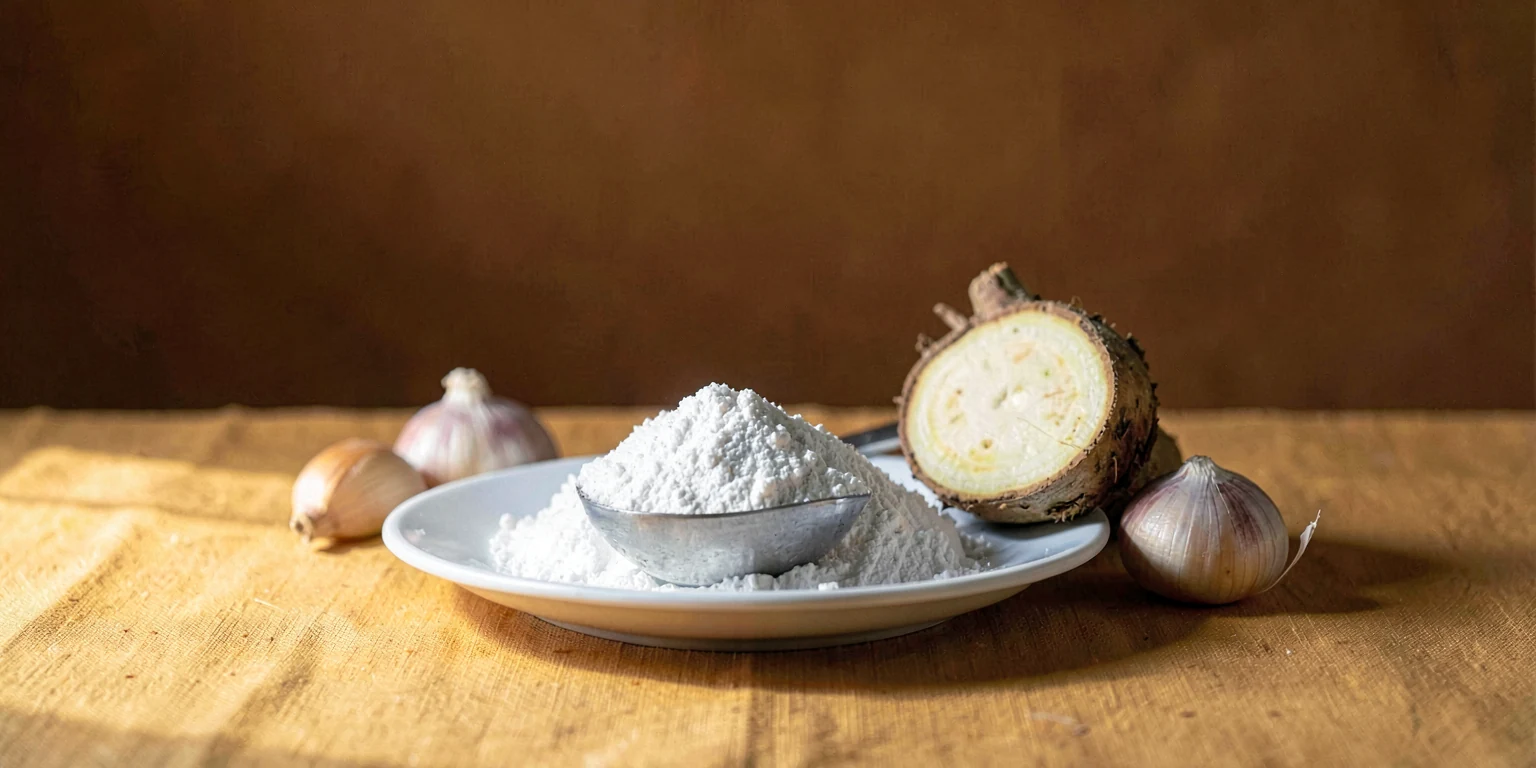
Inulin and galacto-oligosaccharides do one thing reliably: they feed bacteria you already have, and Bifidobacterium counts go up.1 It takes less than you would guess, about 2.4 grams a day.4 The gas that arrives in the first week is the same reaction. Whether the extra bacteria are worth anything is the open question.
What the trials counted
Almost every prebiotic trial shares one main outcome, and it is not how anyone feels. It is a bacterial count.
The largest analysis in healthy adults gathered 64 trials in 2099 participants and asked what fiber supplements do to the mix of bacteria in the gut.1 Bifidobacterium rose, by a standardized mean difference of 0.64.1 That unit measures a result in standard deviations: 0.2 counts as small, 0.5 as moderate, 0.8 as large. So this one is solid.
Lactobacillus rose less, at 0.22.1 Butyrate in the stool, a fuel that colon cells burn, barely cleared the line at 0.24 with a p value of 0.05.1 Alpha diversity, the number supplement marketing likes most, did not move at all.
The breakdown by fiber type is the part worth keeping. Fructans, the inulin family, and galacto-oligosaccharides were the two types that raised both groups of bacteria.1 That is the whole empirical basis for selling inulin and GOS as prebiotics while cellulose is sold as roughage. It is a real finding about bacteria. It is not yet a finding about people.
The doses that did it
The amounts involved are smaller than the tubs suggest. The lowest dose tested here was 2.4 g of galacto-oligosaccharides a day for six weeks, a small spoonful of powder.4 Bifidobacterium still tripled, from 1.4% of the bacteria present to 5.9%, with no change in the placebo group.4
A supplement carrying only 3.2 g of inulin a day, given to 34 kidney patients across 12 weeks, enriched Bifidobacteria enough to shift a blood marker.6 Ten grams a day of inulin for six weeks raised Bifidobacteria in 24 adults at elevated risk of type 2 diabetes.3 Near the top of the range, 14.2 g a day of a galacto- and fructo-oligosaccharide blend changed the bacteria of both mother and infant in a pregnancy trial.5
From a small spoonful to a heaped tablespoon, then, the bacterial response is already there. One thing is worth noticing about that list: only the largest analysis was restricted to healthy adults.1 The individual trials ran in kidney patients, pregnant women, children and people with prediabetes, each group chosen because it offered an outcome worth measuring. The bacterial effect looks consistent across all of them. Whether the rest of what those trials found transfers to a healthy person buying a tub is a separate question.
The gas is in the trial reports
Tolerance usually turns up in one sentence near the end of a report, which is roughly the reverse of the attention it gets from the person taking the powder.
The clearest account comes from a 12-week trial in 116 overweight adults on a 500 kcal daily deficit.2 They took either 10 g of inulin plus 10 g of resistant maltodextrin, or 20 g of placebo, stirred into 400 mL of milk.2 Weight loss was no different between the groups. Blood pressure fell further on fiber, by 5.35 mmHg systolic and 2.82 mmHg diastolic.2 And the fiber group reported more gut symptoms than placebo, symptoms that eased as the weeks went on.2
Smaller doses show the same signal in miniature. In the kidney trial, two of the seventeen patients taking the supplement reported more flatulence, and nothing else was flagged for safety.6
This is not a side effect in the ordinary sense. Inulin and GOS are not digested in the small intestine. Bacteria in the colon break them down instead, and gas is what that reaction produces. A prebiotic that made no gas at all would be a prebiotic nothing was eating. The useful question is not whether it happens, but whether it settles.
Where the higher counts stop mattering
Here is the gap the label does not describe. The inulin trial got its increase in Bifidobacteria, then measured the thing the increase was supposed to be for. Insulin sensitivity, in adults picked because they were already at risk, did not improve.3 The authors wrote that their own findings question the need for larger studies in this population, which is an unusually honest closing line.
The trial in children has the same shape. Bifidobacterium tripled. Behavior did not separate from placebo. The two measures that did favor prebiotics, gut symptoms at 0.47 and parental quality of life at 0.44, fall just short of moderate on that same standard-deviation scale, and the authors called the result marginal.4
One trial did reach a clinical marker. Fifty-three prediabetic adults took a fiber supplement or a cellulose placebo for 12 weeks.7 The fiber arm gained diversity and butyrate-producing bacteria, and its long-term blood sugar marker and fasting glucose fell below the prediabetes thresholds, while the placebo group did not change.7
The catch sits in the ingredient list. That supplement combined konjac glucomannan, galacto-oligosaccharides and a bacterial exopolysaccharide, so the result belongs to the blend rather than to GOS. A trial built that way can show that something worked. It cannot say which part did it.
The 20 g trial is the sharpest version of the problem. It was designed to add weight loss to a calorie deficit, and did not.2 What it found instead was a blood pressure change nobody had bought the fiber for.
Starting without quitting
Two things in the record are useful to someone opening a tub. Symptoms eased rather than accumulated; in the only trial here that tracked them across three months, they faded.2 And compliance at the low end was excellent, with 94% of doses taken at 2.4 g a day across six weeks.4
Worth noticing what is absent. None of these reports describes a build-up period. Participants took the full daily dose from day one, which is also the design most likely to produce the early complaints these trials record.
What is still unknown
Whether a higher Bifidobacterium count does anything a person can notice. The trials that looked hardest for a downstream effect, on insulin sensitivity and on symptoms and quality of life, came back flat or marginal.3
Whether the gas settles for everyone or only on average. Easing is a group average, and a group average can hide the person who stopped at week two.
Whether the same fibers eaten in onions, wheat and chicory behave like the isolated powders. Every trial here compared a powder against a placebo powder, so the swap most readers would actually make has never been tested.
Whether the ingredient that matters can be named at all. The one trial here that moved a glucose marker used three fibers at once.7 The trials that isolated a single fiber measured bacteria and stopped there, or measured a clinical outcome and found nothing.
And whether any of it lasts. These interventions ran six to 12 weeks.3 Nobody in this set was followed after the tub ran out.
QUESTIONS THIS POST ANSWERS
- Why do prebiotics make me gassy at first?
- Because gas is a product of the fermentation you are paying for. Inulin and galacto-oligosaccharides pass the small intestine undigested and are fermented in the colon, which is the same activity that raises Bifidobacterium counts. In the trial that measured tolerance over twelve weeks, the fiber group reported more gastrointestinal symptoms than placebo, and those symptoms attenuated over time.
- Can I get enough prebiotic fiber from food alone?
- The trials in this set cannot answer that, because each compared an isolated powder against a placebo powder rather than food against a supplement. What they do show is that the effective dose is small: 2.4 g of galacto-oligosaccharides a day tripled Bifidobacterium from 1.4% to 5.9% of the community. Whether the same fructans eaten in onions or wheat behave identically has not been tested head to head.
REFERENCES
- 1So D, et al. Dietary fiber intervention on gut microbiota composition in healthy adults: a systematic review and meta-analysis. The American journal of clinical nutrition. 2018. Source
- 2Hess AL, et al. The effect of inulin and resistant maltodextrin on weight loss during energy restriction: a randomised, placebo-controlled, double-blinded intervention. European journal of nutrition. 2020. Source
- 3Mitchell CM, et al. Prebiotic Inulin Supplementation and Peripheral Insulin Sensitivity in adults at Elevated Risk for Type 2 Diabetes: A Pilot Randomized Controlled Trial. Nutrients. 2021. Source
- 4Palmer JK, et al. A Double-Blind Randomised Controlled Trial of Prebiotic Supplementation in Children with Autism: Effects on Parental Quality of Life, Child Behaviour, Gastrointestinal Symptoms, and the Microbiome. Journal of autism and developmental disorders. 2025. Source
- 5Jones JM, et al. Maternal prebiotic supplementation during pregnancy and lactation modifies the microbiome and short chain fatty acid profile of both mother and infant. Clinical nutrition (Edinburgh, Scotland). 2024. Source
- 6Mitrović M, et al. The Impact of Synbiotic Treatment on the Levels of Gut-Derived Uremic Toxins, Inflammation, and Gut Microbiome of Chronic Kidney Disease Patients-A Randomized Trial. Journal of renal nutrition. 2023. Source
- 7Beteri B, et al. Impact of Combined Prebiotic Galacto-Oligosaccharides and Bifidobacterium breve -Derived Postbiotic on Gut Microbiota and HbA1c in Prediabetic Adults: A Double-Blind, Randomized, Placebo-Controlled Study. Nutrients. 2024. Source