Probiotics with antibiotics, and what helps the gut after
Across 36 trials and 9,312 people, taking a probiotic alongside antibiotics cut the risk of diarrhea by roughly a third. Fiber, not the probiotic, is what the evidence points to once the course ends.
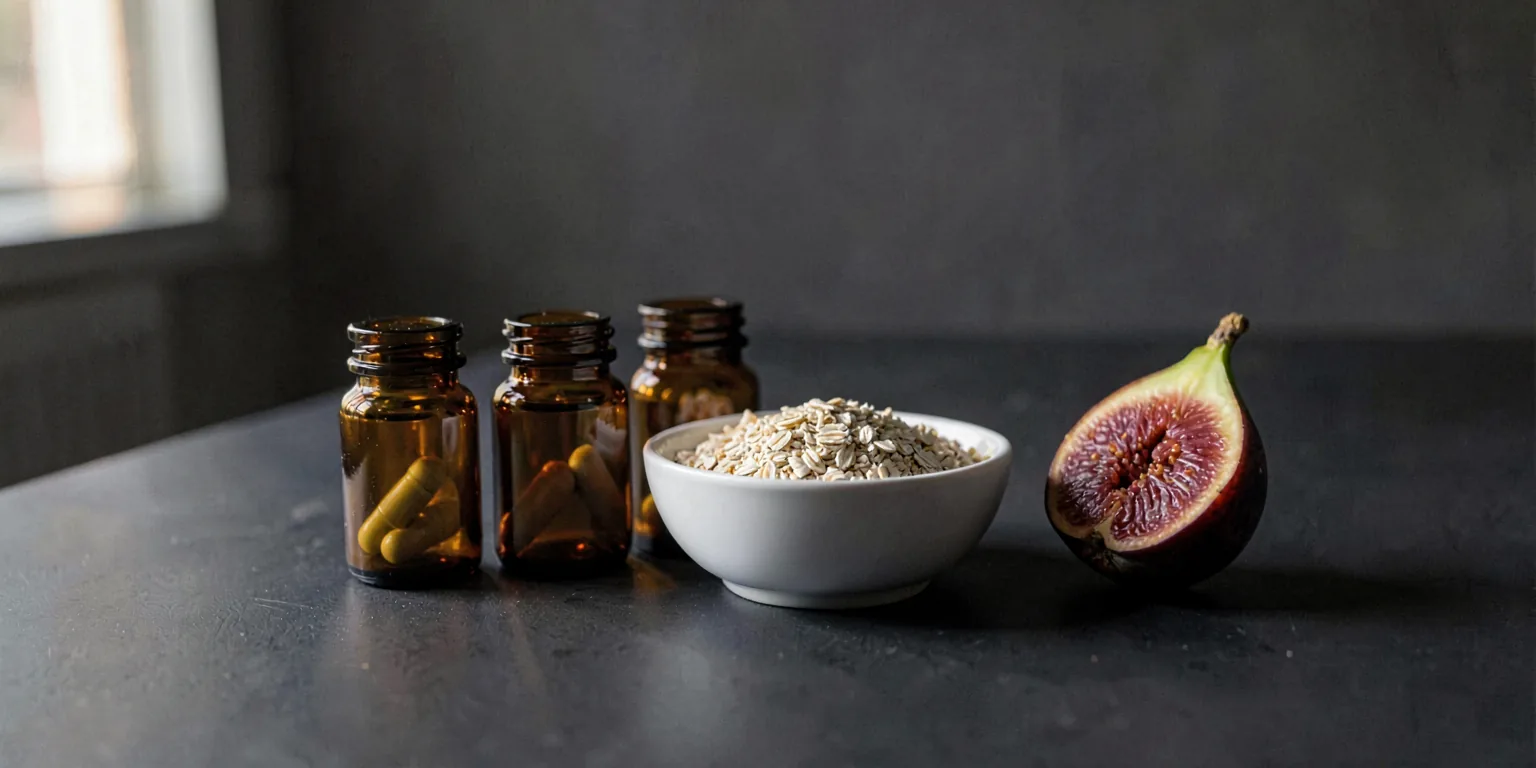
About a quarter of people who take antibiotics get diarrhea from them.6 A probiotic taken alongside the antibiotic lowers that risk by roughly a third.1,2 What happens to the gut's normal bacteria once the course ends is a separate question, and the evidence there points less at a supplement and more at what ends up on the plate.5
What the diarrhea trials actually tested
Most of the studies behind this finding share a simple design. People starting a course of antibiotics also get a probiotic capsule or a placebo. Researchers then count who develops diarrhea. One analysis pooled 36 such trials in adults, covering more than nine thousand people, and found the probiotic group had 38% fewer cases.1 A newer review that pooled 40 trials across adults and children together found a similar 33% reduction.2
In children the pattern held just as clearly. Across 33 trials and 6,352 kids, 8% of the probiotic group developed diarrhea, against 19% in the placebo group.3 Put plainly, for every nine children given a probiotic during their antibiotic course, one case of diarrhea was prevented that would otherwise have happened.3 A higher daily dose worked better than a low one in that same review, though the trials pooled together used many different organisms, so the result belongs to the category as a whole rather than to any one product.3
Timing changes the result
When the probiotic starts matters almost as much as whether it is used at all. Researchers comparing timing in elderly patients found that starting within two days of the first antibiotic dose produced fewer cases of diarrhea than starting later.4 The largest adult review reached the same conclusion. Its authors specifically recommended starting probiotics as early as possible during the antibiotic course rather than afterward.1
That is a real gap between two habits that look similar from outside. A probiotic bought once the antibiotic bottle is already empty is not what these trials tested. They enrolled people who took both together, from close to the first dose.
A more serious infection tells a different story
Antibiotics can also open the door to Clostridioides difficile, a bacterium that causes a more severe, sometimes dangerous diarrhea. Here the picture is smaller but still positive. A recent Cochrane review found probiotics cut the relative risk of this infection by half.2 The actual number of cases prevented was modest, though: about one case avoided for every 65 people who took a probiotic.2 That gap between a large relative reduction and a small absolute one is common in infections that are rare to begin with. It is also why the same review rated the certainty of its own finding low.2
Where the evidence thins: recovery of the gut itself
Diarrhea is a symptom the trials above can count directly, at the bedside, on a chart. Whether the gut's normal bacterial community actually bounces back afterward is a harder question, and far fewer studies here address it directly. A 2025 review of nutrition and infection recovery reported that high-fiber diets, not probiotic supplements, were the intervention linked to faster recovery of the gut microbiota once antibiotics stopped.5
The same review pointed to a mechanism behind that link. Short-chain fatty acids are compounds the gut's own bacteria make when they ferment fiber, and the review tied them to a milder course of C. difficile infection specifically.5 That is a different pathway than the one behind the diarrhea-prevention trials above, and it comes from a different, thinner slice of the evidence. None of the meta-analyses in this piece measured how quickly bacterial diversity returned to normal. They measured whether people got diarrhea, a much easier thing to count.
What a fiber-first plan looks like in practice
Nothing in the trials here specifies an exact food or gram target for recovery, so the honest version of this advice stays general: foods that feed the gut's own bacteria, rather than a new capsule, are the direction the recovery evidence points once the antibiotic course is done. That includes the kinds of plant fiber found in oats, beans, and vegetables, the same fiber sources short-chain fatty acids are made from. The distinction matters because it is a different intervention from the one tested in the diarrhea trials, aimed at a different outcome, on a different, much less certain evidence base.
What the trials do not settle
Which strain, and how much of it, is still open. The pediatric review above found a higher dose worked better, but different trials used different organisms and combinations, so no single labeled product can claim the pooled result as its own.3 The adult reviews share that same limitation: each combines dozens of different probiotic products into one average.1,2
Fiber's role after the antibiotic course is suggestive rather than settled. The review that raised it is a narrative summary of the field, describing a direction rather than reporting its own trial with its own participant count.5 Nothing in the research reviewed here tracked the same people through both the antibiotic course and the weeks after, comparing a probiotic-only plan against a fiber-forward one head to head. That trial does not appear to exist yet.
Until it does, the honest summary stays in two separate pieces. Probiotics taken with the antibiotic lower the chance of getting diarrhea from it. Diets built around fiber are what the existing literature associates with the gut recovering once the course is over. They are not competing answers to the same question. They are answers to two different ones, tested by two different kinds of evidence.
QUESTIONS THIS POST ANSWERS
- Should probiotics be taken during or after a course of antibiotics?
- The trials that separated people by timing found an advantage to starting early. In one analysis of elderly patients, giving probiotics within two days of the first antibiotic dose produced a lower rate of diarrhea than starting later, and the researchers who ran the largest recent meta-analysis concluded that starting as early as possible during the antibiotic course, rather than after it, was the pattern with a positive and safe effect.
- How long does the gut take to recover after antibiotics?
- The trial evidence does not give a firm number of days or weeks, because most of the studies here tracked diarrhea, not the microbiome itself. A recent review of nutrition and infection recovery found that high-fiber diets promote faster recovery of the gut microbiota after antibiotic therapy, which points to what to eat during recovery more than how long it takes.
REFERENCES
Each reference was re-checked against PubMed before publication. How sources are checked
- 1Liao W, et al. Probiotics for the Prevention of Antibiotic-associated Diarrhea in Adults: A Meta-Analysis of Randomized Placebo-Controlled Trials. Journal of clinical gastroenterology. 2021. Source
- 2Esmaeilinezhad Z, et al. Probiotics for the prevention of Clostridioides difficile-associated diarrhea in adults and children. The Cochrane database of systematic reviews. 2025. Source
- 3Guo Q, et al. Probiotics for the prevention of pediatric antibiotic-associated diarrhea. The Cochrane database of systematic reviews. 2019. Source
- 4Zhang L, et al. Early use of probiotics might prevent antibiotic-associated diarrhea in elderly (>65 years): a systematic review and meta-analysis. BMC geriatrics. 2022. Source
- 5Moura IB, Buckley AM. Using nutrition to help recovery from infections. Current opinion in gastroenterology. 2025. Source
- 6Doron SI, et al. Probiotics for prevention of antibiotic-associated diarrhea. Journal of clinical gastroenterology. 2008. Source