What actually happens when you cut salt: the sodium trials
Salt-reduction trials move blood pressure down within weeks, more for people who start out high than for people who start out normal.
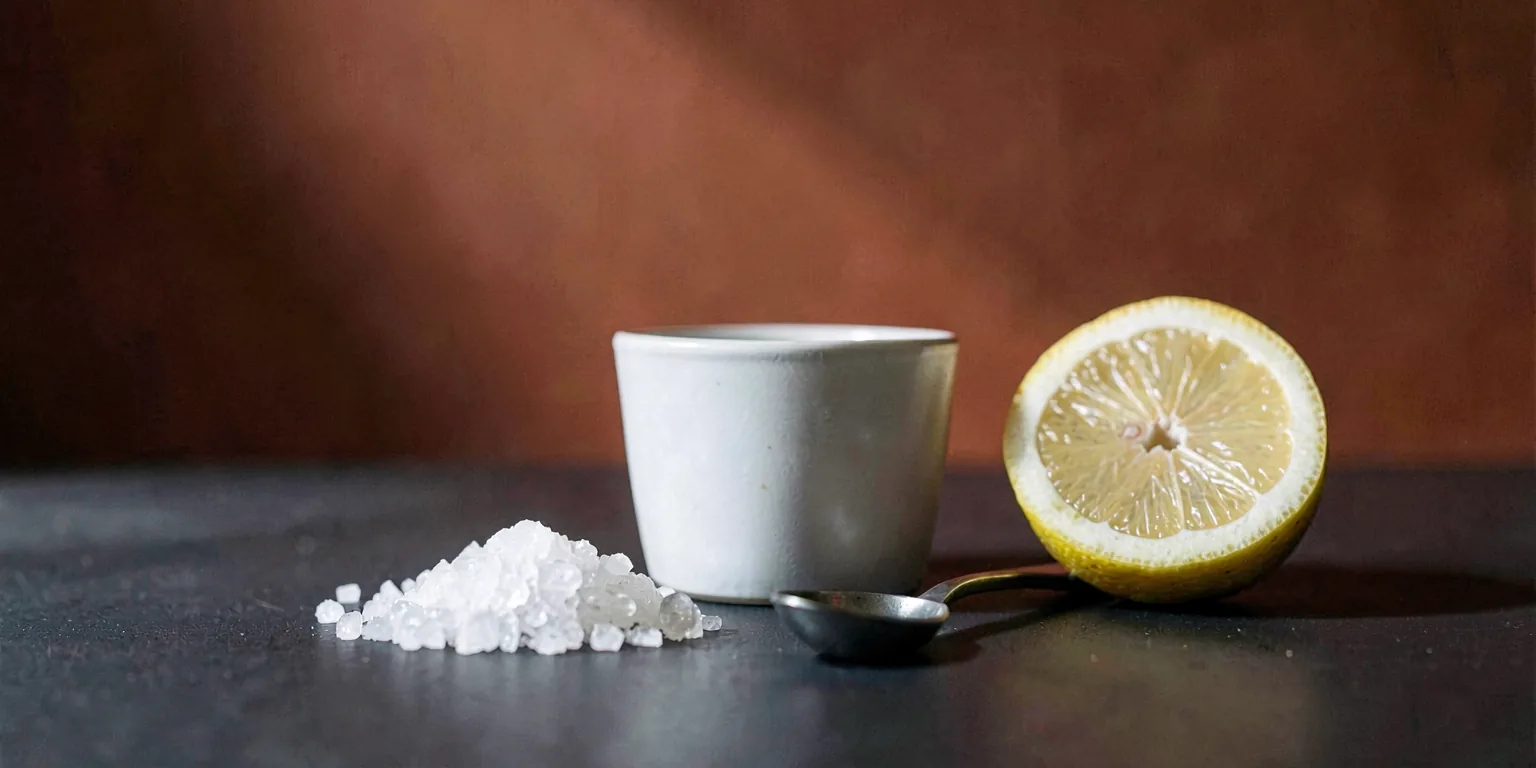
Most people eating an ordinary Western diet take in far more salt than health guidelines call for. Trials that lowered people's salt for a month or longer brought their blood pressure down.1 The drop was bigger in people who started out high. Guidelines land close to one level teaspoon of salt a day, from every source.
The limit versus the plate
One long-running review of the salt-reduction trials set a target: cut from a typical 9 to 12 grams of salt a day down to 5 to 6 grams. It named 3 grams as the eventual goal for a whole population.1 A level teaspoon of table salt weighs about 6 grams. So the near-term goal sits close to one teaspoon a day, counting salt already cooked into bread, sauces, soup, and cured meat, not only what gets added at the table.
What blood pressure does when sodium falls
The trials that test this are simple. Move a group of people onto less salt. Measure their blood pressure before and after. Compare the change against a group left alone. Across a pooled data set of more than 12,000 people, each 50-millimole cut in daily sodium brought systolic pressure down by about 1.1 points and diastolic by a third of a point.2 The relationship holds as a slope, not a threshold. Cut sodium further and the fall in blood pressure grows roughly in step.2
A separate route to the same place is the DASH diet, built around vegetables, fruit, low-fat dairy, and less sodium at once. Across 30 trials, it lowered systolic pressure by 3.2 points and diastolic by 2.5, compared with a typical control diet.3 The DASH effect was larger in trials where people started out eating more than roughly 2,400 milligrams of sodium a day. That matches the salt-only trials: the higher the starting point, the more there is to gain.3
Who gains the most
The averages hide a real split. In trials that enrolled only people with high blood pressure, cutting salt lowered systolic pressure by about 5.4 points and diastolic by 2.8. In people whose blood pressure was already normal, the fall was smaller, about 2.4 points systolic and 1 point diastolic.1 Both groups still moved the same direction.
Age and background mattered too. For the same cut in sodium, older adults, non-white populations, and people who started with higher blood pressure saw a bigger fall than everyone else.2 Trial length mattered as well. Studies shorter than 15 days measured barely half the blood pressure drop that longer trials found for the same cut in sodium.2 A short trial understates what a sustained one would show.
Why a few points matter
A handful of points on a blood pressure cuff sounds small next to a diagnosis. But a review of pooled studies ties it to outcomes that are not small. Each extra gram of sodium eaten per day was linked to systolic pressure 0.6 points higher, a 4% higher risk of cardiovascular disease, and a 6% higher risk of stroke.4 Those are relative risks added on top of whatever a person's baseline already was, not a fixed number of extra cases for everyone. That is the case for treating a small daily reduction as worth making, not just a number on a printout.
Salt substitutes: swapping instead of cutting
A different strategy is not eating less salt but changing what is in it. Low-sodium salt substitutes trade some of the sodium chloride in table salt for potassium chloride. Across 26 trials and nearly 35,000 adults, substitutes lowered systolic blood pressure by about 4.8 points and diastolic by 2.4, alongside a small rise in blood potassium.5
The largest single test of this ran for years in villages across rural China. It compared a substitute against ordinary salt in over 20,000 people who had a history of stroke, or were 60 or older with high blood pressure. The substitute group had a lower rate of stroke, fewer major cardiovascular events, and fewer deaths than the group on regular salt, without significantly more serious problems tied to high potassium.7 Stroke rates were 29.14 per 1,000 person-years on the substitute against 33.65 on regular salt, and deaths were 39.28 against 44.61.7
A separate look across longer trials found lower all-cause and cardiovascular death with salt substitutes, though with low certainty.6
What remains unknown
Most of the substitute evidence comes from one enormous trial run in China among older adults already at high cardiovascular risk. How well the finding travels to healthier, younger, or non-Chinese populations is still an open question.6 Every trial of substitutes also excluded anyone at real risk from higher potassium. None of this evidence covers people with kidney disease or people on medications that raise blood potassium, and the small rise in blood potassium seen in the general trial population is exactly what makes that group different.5
The blood-pressure trials themselves mostly ran weeks to months, not years. They measure a population average, not what any one person's blood pressure will do. Salt sensitivity varies from person to person, and a pooled average of a few points can sit on top of people who barely move and people who move a great deal. The trials also measure sodium mainly through urine samples taken around the study visits, a reasonable stand-in for daily intake but not a perfect record of what got eaten. What is well established is the direction: less sodium in, on average, means lower blood pressure out, more so the higher a person started.
QUESTIONS THIS POST ANSWERS
- Does cutting salt matter if my blood pressure is normal?
- Yes, but the drop is smaller. Trials restricted to people with high blood pressure saw systolic pressure fall by about 5.4 points and diastolic by 2.8; in people whose blood pressure was already normal, the fall was roughly 2.4 points systolic and 1 point diastolic. Both groups moved in the same direction, just by different amounts.
- Are potassium-based salt substitutes a good idea?
- For older adults at high cardiovascular risk, the trial evidence leans yes: substitutes lowered blood pressure and were tied to fewer strokes and deaths in the largest trial to test them. For healthier or younger people the evidence is thin. They also raise blood potassium slightly, and every trial excluded people at higher risk from that rise, so anyone with kidney disease or on medication that affects potassium needs a different answer.
REFERENCES
Each reference was re-checked against PubMed before publication. How sources are checked
- 1He FJ, et al. Effect of longer term modest salt reduction on blood pressure: Cochrane systematic review and meta-analysis of randomised trials. BMJ (Clinical research ed.). 2013. Source
- 2Huang L, et al. Effect of dose and duration of reduction in dietary sodium on blood pressure levels: systematic review and meta-analysis of randomised trials. BMJ (Clinical research ed.). 2020. Source
- 3Filippou CD, et al. Dietary Approaches to Stop Hypertension (DASH) Diet and Blood Pressure Reduction in Adults with and without Hypertension: A Systematic Review and Meta-Analysis of Randomized Controlled Trials. Advances in nutrition (Bethesda, Md.). 2020. Source
- 4Kong F, et al. Dietary salt intake and cardiovascular outcomes: an umbrella review of meta-analyses and dose-response evidence. Annals of medicine. 2025. Source
- 5Brand A, et al. Replacing salt with low-sodium salt substitutes (LSSS) for cardiovascular health in adults, children and pregnant women. The Cochrane database of systematic reviews. 2022. Source
- 6Greenwood H, et al. Long-Term Effect of Salt Substitution for Cardiovascular Outcomes: A Systematic Review and Meta-analysis. Annals of internal medicine. 2024. Source
- 7Neal B, et al. Effect of Salt Substitution on Cardiovascular Events and Death. The New England journal of medicine. 2021. Source